The BRAIN Project | How-to Guide
Implementing a Geriatric Comfort Cart
Rationale
Person-Centered Care for Older Adults
Geriatric comfort carts improve the patient experience while supporting the 4Ms framework, particularly What Matters and Mentation. Comfort carts provide individualized, nonpharmacologic interventions that promote communication, orientation, cognitive engagement, sleep hygiene, mobility, and relaxation. As a result, they help prevent delirium, reduce patient distress, and improve patient experience.
Comfort carts are as effective as they are practical. They offer an affordable approach to person-centered care while empowering bedside clinicians and volunteers to provide meaningful interventions. Patients, caregivers, and staff alike have reported positive experiences with their use.
Key Benefits
- Improve patient satisfaction and overall experience
- Support delirium prevention through individualized, nonpharmacologic interventions
- Promote the 4Ms framework and person-centered care
- Provide an affordable approach to improving care delivery
- Empower staff and volunteers to provide compassionate, meaningful care
Sustainability
Creating a Sustainable Solution
Set yourself up for success. To make sure your cart is easy to sustain, work with procurement and sanitation. At the same time, determine if there are any additional funding sources.
Partner With Supply Chain
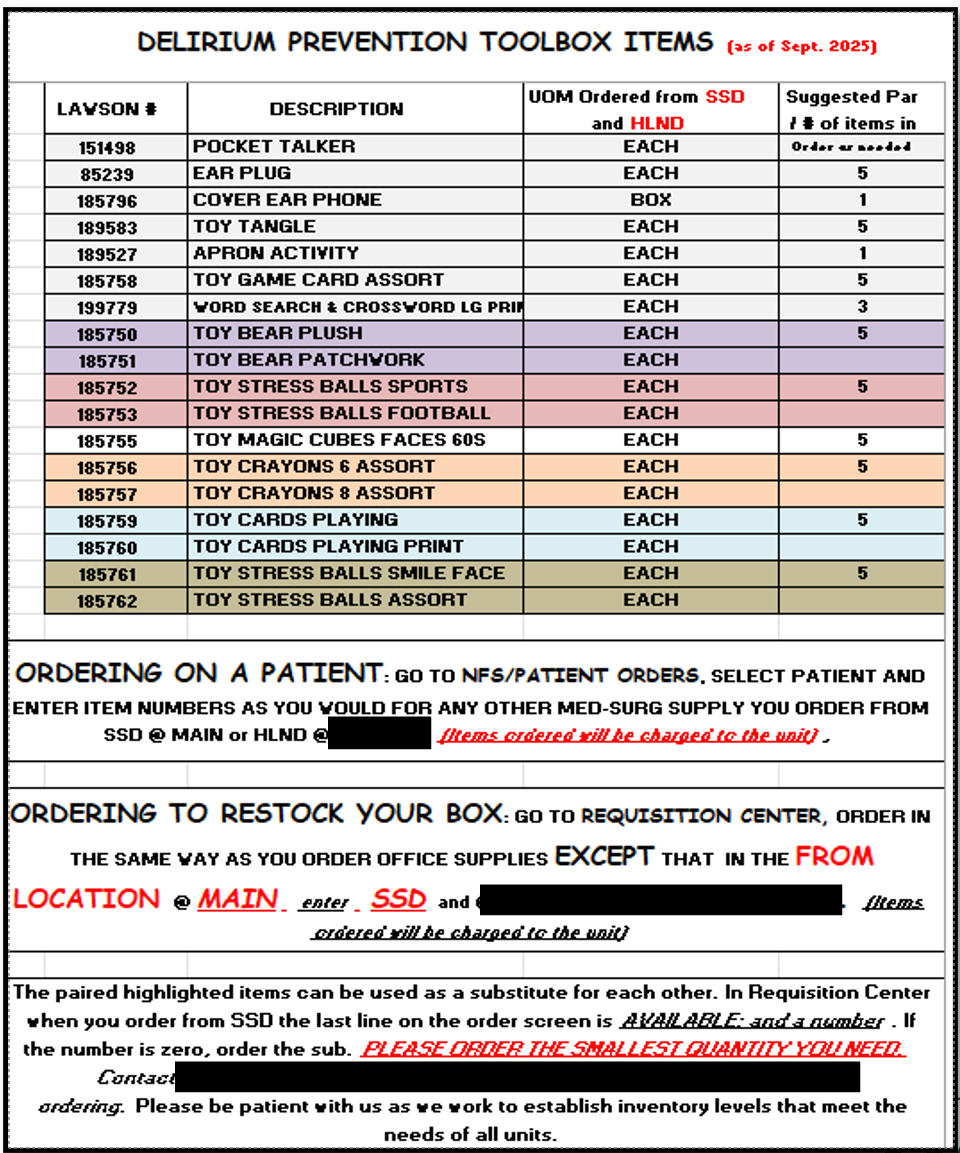
- Establish efficient processes for purchasing, storing, and delivering comfort cart supplies
- Identify opportunities to incorporate existing hospital resources and supplies
The University of Alabama Birmingham (UAB) has integrated their delirium prevention toolbox items into a digital inventory by unit. When an item is ordered via the EMR for a patient, the inventory is updated. Instruction for ordering items to maintain inventory are clearly provided. Each unit is responsible for maintaining the inventory of their toolbox.
Work With Infection Prevention
- Prioritize disposable or easily sanitized items
- Establish clear cleaning and disinfection protocols for reusable supplies
Explore Funding Opportunities
- Fundraising events through the hospital foundation
- Hospital philanthropy and individual donations
- Grant funding
Required Resources
Building the Comfort Cart
Looking to implement a geriatric comfort cart in your ED? Follow these five basic steps and see what resources are required.
1. Choose the Right Cart
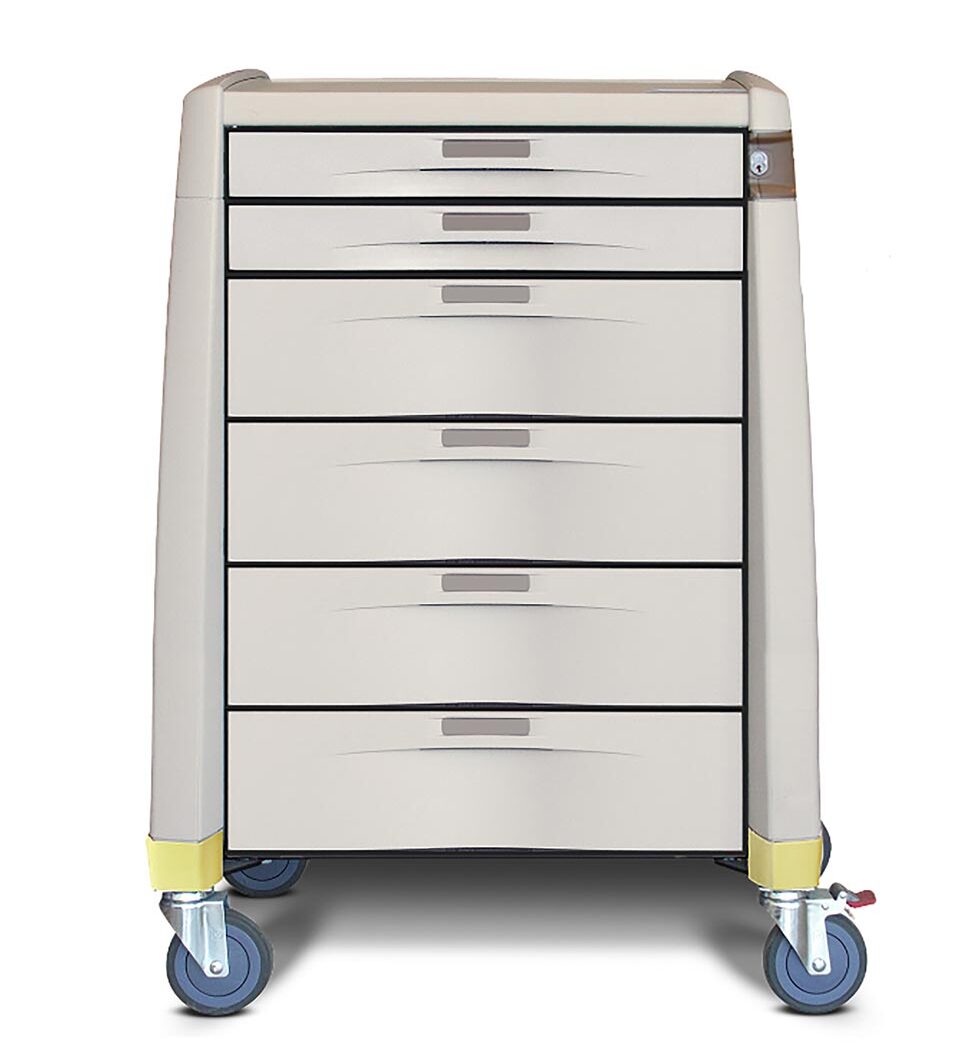
Select a cart that is easily cleanable, mobile, and accessible for bedside use. Ensure it can be conveniently stored and transported throughout the ED.
A Good Alternative
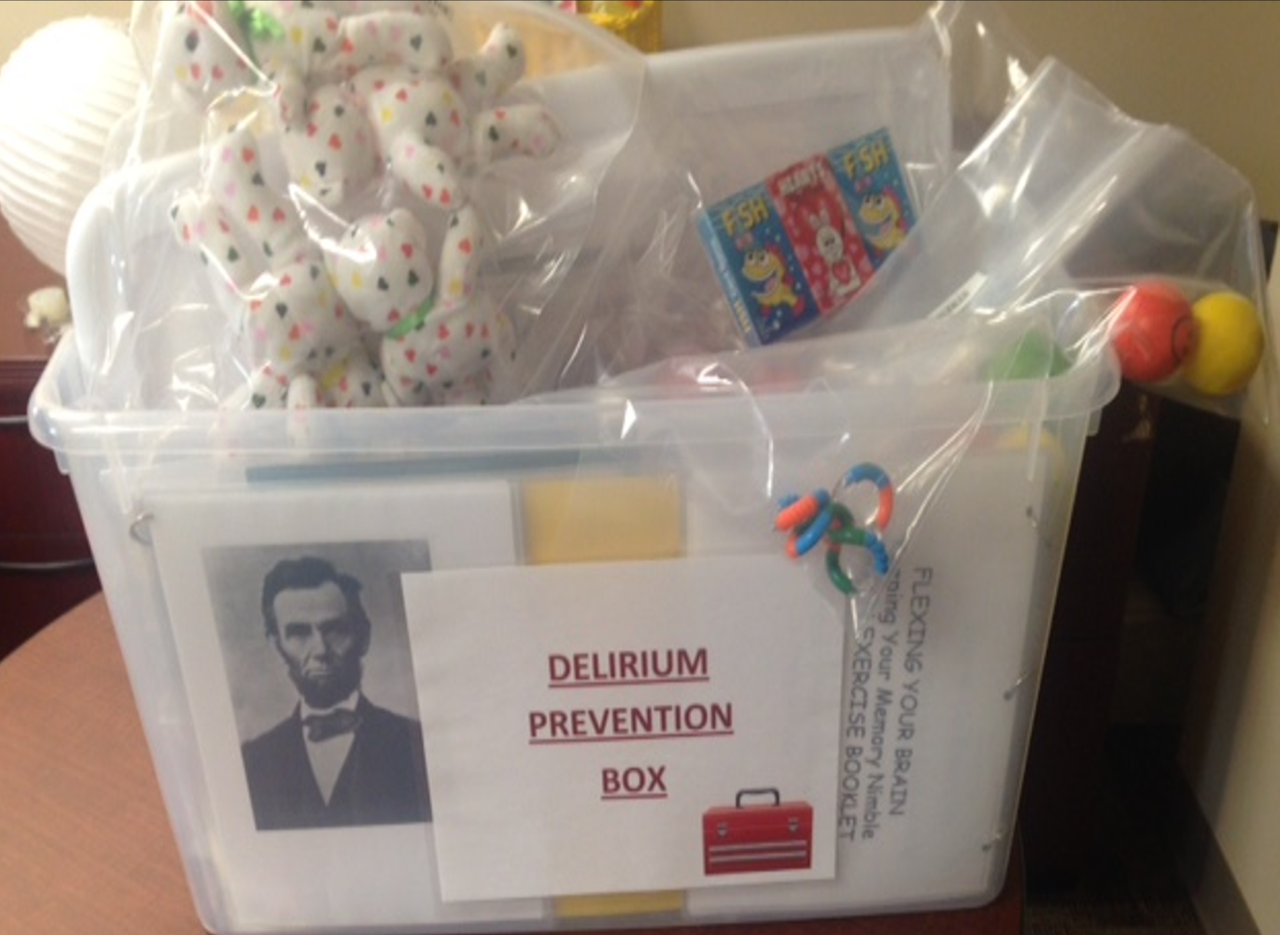
Instead of a geriatric comfort cart, the University of Alabama Birmingham (UAB) provides a delirium toolbox on every unit. The toolbox is a clear, plastic bin stocked with single use items. Each department is responsible for communicating restocking needs with procurement.
2. Decide on Contents
Assess currently available supplies and identify gaps. For example, your ED may already have access to reading glasses and pocket talkers, but it may still require items for cognitive engagement like word puzzles.
Review the following list of supplies for an idea of what you can include in your cart and how it is helpful to older adults in your unit.
Comfort Cart Wish List
To help you plan your comfort cart, we’ve included an editable wish list that includes the items listen below. Take inventory of what your hospital already has access to, and identify your wish list items.
Sleep enhancement
- Earplugs
- Eye mask
Sensory and Communication Enhancement
- Magnifier glasses (a variety of strengths)
- Hearing amplifiers
- Hearing aid batteries (various types)
- Notepad and pen
- Phone charger
Calming/Reassurance
- Stuffed animal
- Tablet, CD player, or other electronic device with headphones for preferred music or calming sounds/meditation
- Robotic pet
- Lifelike baby doll
- Bubble tubes/lava lamps
Cognitive Engagement
- Jigsaw puzzle
- Word puzzles and pens
- Adult coloring book with crayons/markers/colored pencils
- Games on electronic tablet
- Books/magazines
- Playing cards/board games
- Crafts
- Musical instruments
Exercise
- Handheld weights
- Pedal bike
Distrators
Devices to Deter Treatment Disruption
- Stress ball
- Long sleeved shirt
- Activity apron
- Fiddle/fidget items
Comfort
- Blankets
- Fan
- Hot and cold packs
- Personal care items (toothbrush, toothpaste, mouth swab, comb, deodorant, hand lotion)
Consider Including Delirium Education Materials
Items in the comfort cart are non-pharmacologic interventions that are proven to reduce the risk of developing delirium. As such, it may be useful to frame the cart as a delirium prevention intervention and include a delirium education brochure for caregivers and a one-pager for staff.
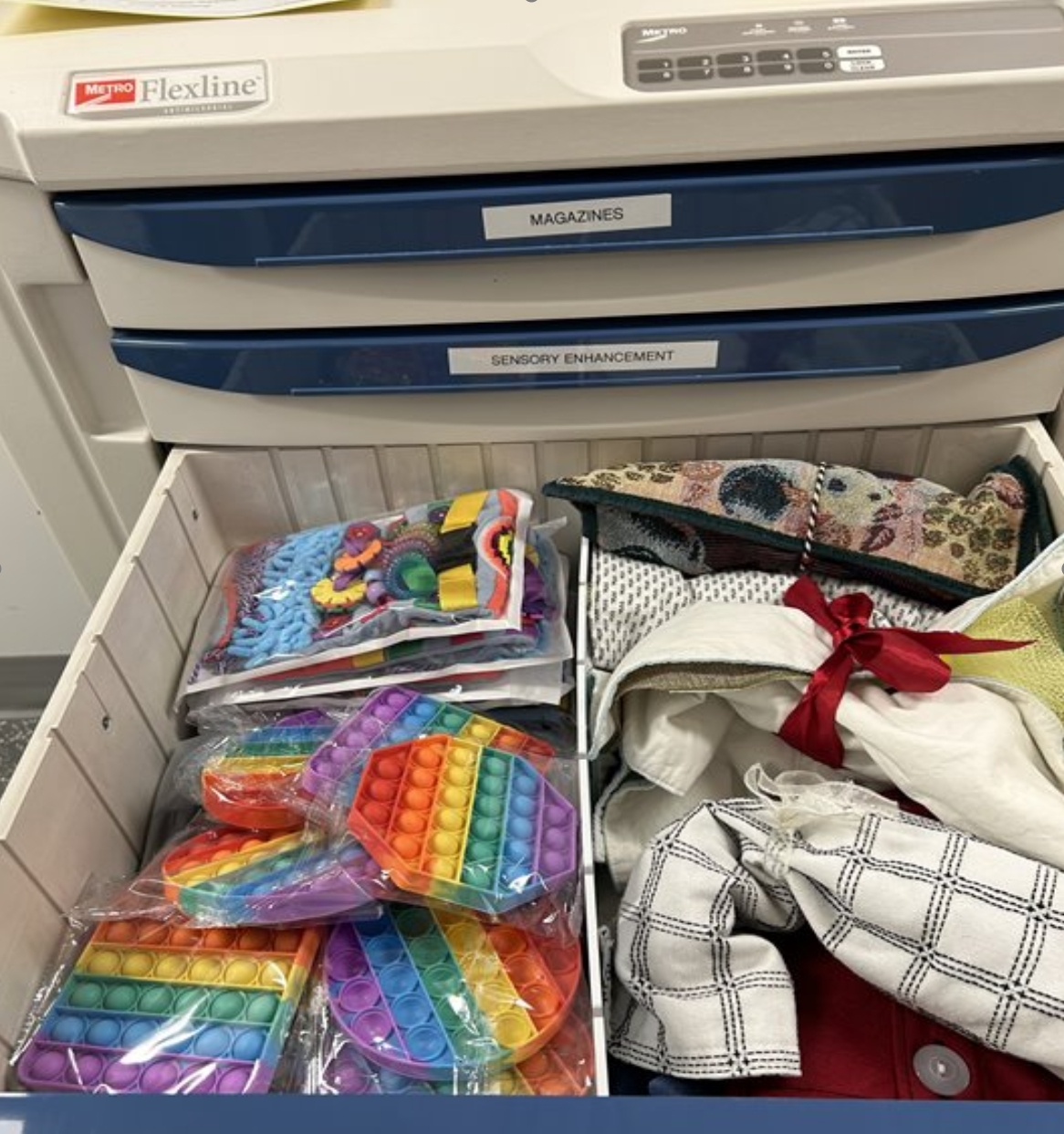
3. Sort Your Supplies
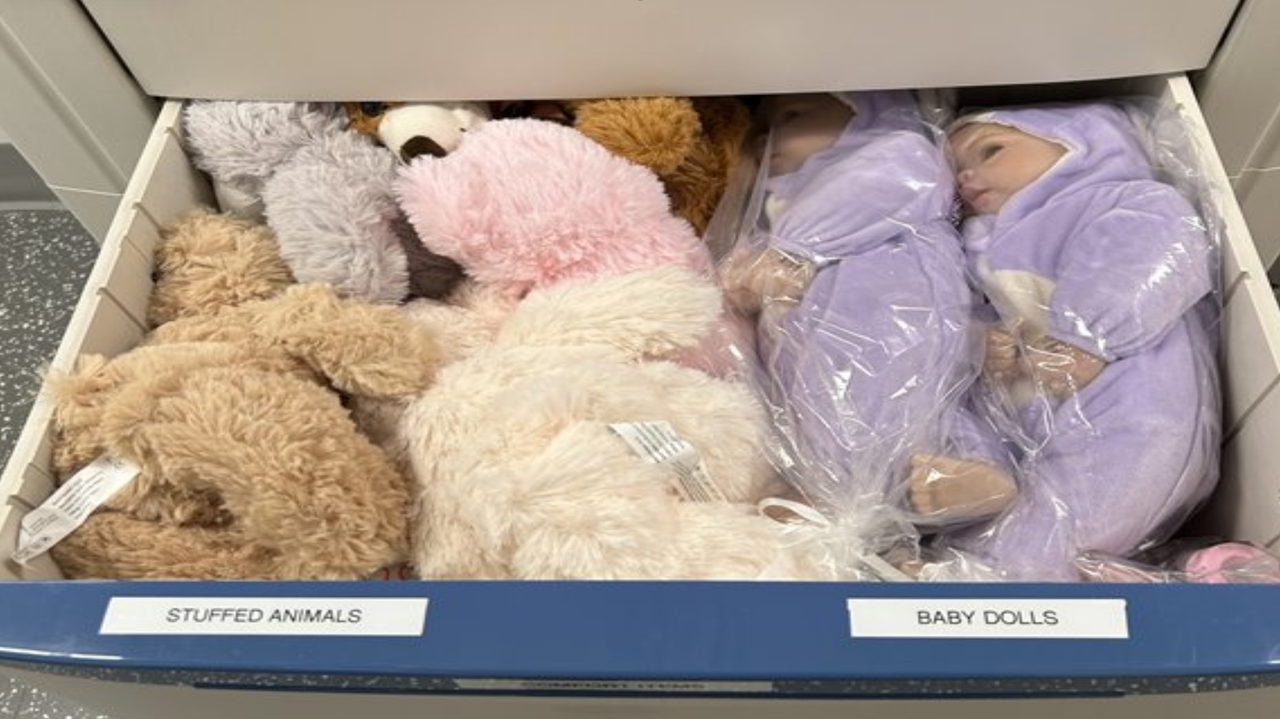
Organize supplies into clearly labeled categories, so items are easy for staff and volunteers to find and restock. Labels might include:
- Hygiene and Personal Care
- Comfort and Warmth
- Communication
- Cognitive Stimulation
4. Develop a Comfort Cart Menu
Create a menu that allows patients, family members, and staff to select whatever is most helpful. Keep it simple, use large print, and make sure it’s laminated. Listing available items is good, but including pictures of items is even better.
Show Patients What’s Available
Give patients a clear idea of what’s in the comfort cart. We’ve included a template to help you craft a menu.
Comfort Cart Menu Template
Use this template as a starting point for your own cart menu.
5. Create Patient Preference Form
Determine what matters most to each patient through input from the patient and their care partner. You can use a Personal Preference Form or Personal Approach Form. This form asks for a few personal details and preferences, so cart use can be tailored. It can be completed by the patient, care partner, staff, or volunteer.
Learn What Matters Most
Get to know your patient through a simple form and personalize cart use.
Personal Preference Form Template
Review this template and adapt it as needed.
The Intervention
Initiating Cart Use
Your comfort cart should be readily accessible and familiar to all bedside staff and ED volunteers. To encourage uptake, integrate the cart into routine patient care. It should not function as a supplementary resource that staff must remember to seek out.
Developing a clear protocol will help staff understand who the cart is for, and how it should be used. Here’s an example of what this could look like:
- All patients aged 65+ receive a Personal Preference Form and a Comfort Cart Menu on arrival
- Rounding nurse asks patient about comfort cart items and provides on request
- Comfort cart can be part of delirium prevention order set
Some hospitals will incorporate comfort cart use into order sets for delirium prevention. For example, if a patient screens positive for a high risk of developing delirium, the cart interventions are part of the delirium prevention care pathway and are explicitly ordered by care providers.
Education
Training Staff and Volunteers
Given the demands of daily care, it’s a good idea to incorporate education into existing workflows. That means introducing the cart during staff rounding and morning meetings, alongside orientation training.
The cart can also be used by volunteers where appropriate. Including training on the 4M’s of age-friendly care and how the comfort items can help older adults in volunteer training is helpful. Be sure to convey clear roles and responsibilities, including when and how to offer cart items and where to put used cart items that require sanitation.
The geriatric comfort cart is only useful if staff know it exists. Make sure it’s easily accessible — and that staff understand how to use its resources.
Include One-Page Instructions
UAB includes a one-pager in every unit to show staff what’s available in their toolbox and how to use it.
Sample Comfort Cart One-Pager
Adapt this one-pager to help staff know what’s in their comfort cart or toolbox and why, when, and how to use it.
Monitoring and Evaluation
Assessing Use and Impact
You will need to evaluate whether the geriatric comfort cart is being used, when and how it is used, by whom, and if it is making an impact on patient experience and outcomes. Here are some key questions to ask:
- How is this tracked? Is it part of the EMR?
- Do volunteers record when they’ve used it?
- How do you stock supplies? Daily? Weekly?
Continued Improvement
Making improvements over time will help ensure that the cart is continuing to enhance care. As a first step, collect staff feedback to identify the most frequently used items. You may also want to incorporate requests and suggestions from patients, caregivers, and volunteers.
While gathering input, capture success stories — moments your comfort cart made a difference to your patient. These can help demonstrate the cart’s ongoing impact and justify adding resources to the program.
Success Stories
Discover How Comfort Carts Make a Difference
Looking for real-world inspiration? Find examples of successful volunteer programs and success stories here.
Eldercare Foundation
Eldercare Puts Comfort at the Heart of Emergency Care for Seniors
Comfort carts are improving care for older adults across 13 Vancouver Island EDs.
University Health Network (UHN) Foundation
How Delirium Education Improves Care at UAB
Meet two Toronto hospitals making a big impact with geriatric comfort carts.

Subject Matter Expert
Christine Waszynski, DNP, APRN, GNP-BC, FAAN
Christine Waszynski, DNP, APRN, GNP-BC, FAAN, is a highly distinguished geriatric nurse practitioner and clinical nurse specialist with more than four decades of experience caring for older adults across the full continuum of care, including emergency, acute, post-acute, long-term, and community settings. A nationally recognized leader in delirium and dementia care, she has dedicated her career to advancing prevention, early identification, and care-process redesign, with a particular focus on translating evidence into practical, frontline workflows. She currently serves as the “mentation expert” for the 4Ms framework through the Institute for Healthcare Improvement, and is a past president and long-standing leader in the American Delirium Society.
Within the BRAIN Initiative, her experience directly supports the design team’s core mandate to synthesize real-world best practices into practical, implementation-ready toolkits that can be adopted broadly across hospitals to improve dementia-capable care.
Part of the BRAIN Project
Creating Dementia and Delirium Friendly Hospitals
BRAIN brings together leading hospitals to explore practical interventions for dementia and delirium in ED and inpatient settings. Successful approaches are shared through collaborative sessions and formalized. From there, health systems are equipped to transform care — translating what is already known into what is widely practiced.