

Dr. Danya Khoujah is an emergency physician with a keen interest in geriatric emergencies and medical education. She completed her emergency medicine residency and faculty development fellowship at the University of Maryland in Baltimore, where she continues to serve as voluntary faculty. She practices clinically in Tampa, Fla., and is part of the writing group of the Geriatric ED Guidelines, namely the delirium and medication safety sections. She has developed educational content for healthcare practitioners locally, nationally and internationally, with numerous lectures, podcasts and manuscripts, mostly focused on emergency neurology and geriatrics.
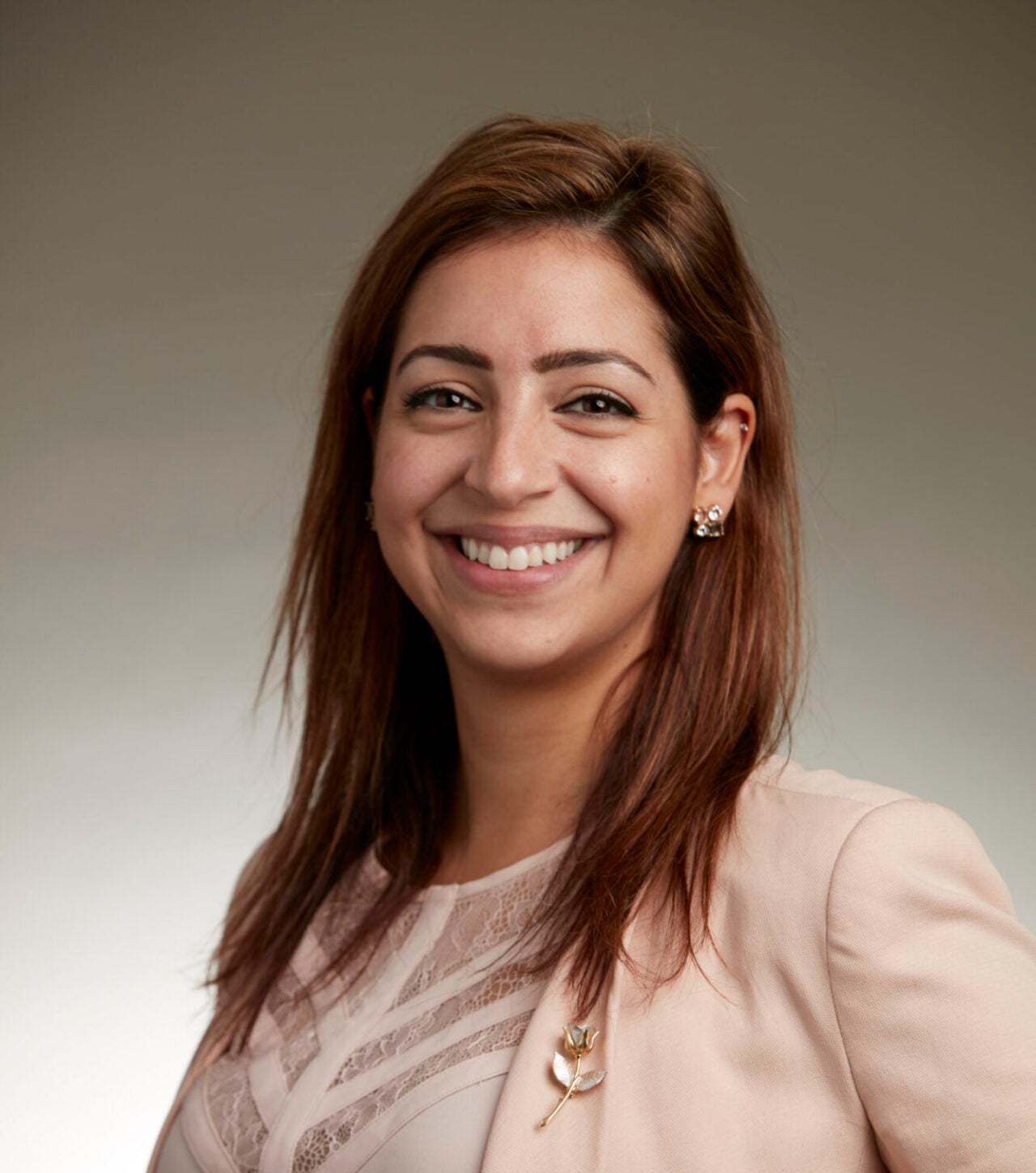
For GEDC’s newest faculty member Danya Khoujah, MBBS, MEHP, all roads led to involvement with the organization.
“You end up at GEDC no matter where you start, because it houses a lot of experts, resources and support,” Khoujah said. “There are just so many ways you end up with GEDC, whether you’re working with your emergency department to get credentialed, connecting with individuals in the field, publishing research or accessing GEDC’s publications.”
Khoujah’s introduction to the organization came through sharing her research in the Journal of Geriatric Emergency Medicine (JGEM) and participating in a GEMCast podcast with Dr. Christina Shenvi. As she developed more relationships within GEDC through her work with the Geriatric ED Guidelines and teaching, Khoujah found her place in the organization.
But Khoujah’s commitment to improving emergency medicine for older adults began long before she learned about GEDC. During her residency training at the University of Maryland, she became interested in geriatric emergencies as she began to understand the implications of the increasing numbers of geriatric patients for the healthcare system.
Furthermore, caring for her own aging parents gave her a different perspective on older adults’ unique needs in emergency department settings.
“I realized that the physicians in their lives were not necessarily addressing [my parents’] care in the way that they needed,” Khoujah said. “I was able to see through their eyes that this wasn’t what they were looking for. That allowed me to have the additional perspective of a caregiver rather than just the professional perspective of a physician.”
Khoujah has applied this knowledge throughout her body of work and for the past five years while she has served as part of the team of multidisciplinary clinicians rewriting the Geriatric ED Guidelines. The group has begun publishing the guidelines for different areas of geriatric emergency medicine, launching the delirium guidelines in early 2025. Khoujah hopes that the guidelines will help fill in the knowledge gaps for physicians caring for older adult patients.
“From a professional standpoint, I feel like sometimes we hit a lot of roadblocks when we’re taking care of older adults,” Khoujah said. “We’re doing things to the patient, not for the patient.
“The more I learned about geriatric medicine and geriatric emergencies, the more gaps I was able to identify in my working environment from incredibly intelligent, hardworking individuals. But it’s just things that they didn’t know about, because they didn’t know any better. Because, again, if we don’t have these guidelines in place, we don’t know what’s best practice.”
Now as a GEDC Faculty member, Khoujah will continue to share best practices in geriatric emergency medicine, not only through her work as a physician and researcher, but also as the host of GEDC’s expert-panel webinars.
The Geriatric ED Guidelines for medication safety are set to publish in 2026.
On-Demand Webinars
Get access to past GEDC expert panel webinars on-demand. Each recorded webinar is available for immediate viewing, with related resources and key learning points.